Sunday, November 24, 2013

Moons, give me a sequel!

If you're a fan of SEGA, you've probably heard the name Team Shinobi a time or two. Streets of Rage, Revenge of the Shinobi, Golden Axe, Altered Beast... but the most notable accomplish of Team Shinobi involves their creation of the Phantasy Star franchise. Trailblazers of the JRPG genre, the first Phantasy Star introduced the combination of a graphically-astounding, story-driven adventure with random battles, a traversable overworld map, dungeons, and towns... two days after Final Fantasy did it! Yeah, I know, but they did feature a female protagonist, which was not a common sight in the gaming industry of the 80s, and Alis was able to chit-chat with a few of the monsters she came across. All FF did was allow four men to beat the shit out of everything that foolishly stood to the left side of them. Wait, was the White Mage a female?

While later iterations feature a more feminine appearance, the build and jawline of the 1987 White Mage after his promotion to a Wizard means Garland was either beaten by the Sausagefest of Light or Chyna and her bukakke squad.
Despite being late to the RP partay, Phantasy Star is considered one of the forefathers to the gaming genre, mostly because the current generation of gamers couldn't care less about the CRPGs of the '70s.

What's not to love? Everyone was white back then.
Actually, many of them didn't care about the genre at all until 1997 when the greatest RPG of all time hit the shelves: Betrayal in Antara!

Graphically superior to anything ported to the Etch A Sketch, this lush forest guarded by a pair of land seahorses is just one of many breathtaking sights Sierra brought to the PC. 
There was also Final Fantasy 7 at that time, but, honestly, the game's only real contribution to the industry is in popularizing the most effective strategy used in Multiplayer PvP: Take the healer out first.

In a failed attempt to deceive Sephiroth, Aerith pretended to be a crab. On the plus side, the cooked roe afterwards was delicious.
Many from Team Shinobi moved on to become Overworks, a short-lived developer known for a crummy sequel to Shinobi, the grossly popular Strategy Dating Sim RPG series Sakura Wars, and, the focus of this entry, Skies of Arcadia.

Also known as Eternal Arcadia, this Dreamcast title about Air Pirates plays out like a 24-episode anime following the formulaic storyline of a typical Shonen series.

The game centers around a planet that is conveniently color-coded based upon six moons (none of whom are related to Mac Tonight) that represent different types of magic. At the height of technological development, mankind began to wage war upon itself, utilizing this moon magic to create super weapons known as the Gigas. At some point during this time, stones from these six moons came crashing into the planet, wiping out nearly all of humanity along with most of its technology. Thousands of years later, after new civilizations have formed,  the empress of the largest empire, Valua, believes that everyone should bow before her and the Valuan armada. Basically, history is going to repeat itself, which is why we meet Fina, a 17-year-old piloting a very small ship.

She left her crossbow at home.
Fina is on a mission to collect all of the Moon Crystals before anyone can use them to reawaken the Gigas. Not sure how she's going to do that alone. I guess she's planning to heal it out of their grasps. From here on out, SoA associates itself with nearly every trope commonly seen in an RPG. Normally, I'd get irritated and call this lazy development, but Overworks utilizes these trends effectively. It's kinda like the storyline of a CLAMP manga.

A ronin wishes for a girlfriend and a persocom. He finds both in a pile of garbage and names her Chi. As the story progresses, they learn more about each other and eventually fall in love. Chi then becomes GLaDOS. 
Even if the player knows what's going to happen, it's obvious that a lot of love went into creating this thing. 

For starters, many of the NPCs, not just the recruitable ones, have unique models. This includes the shopkeepers, wandering villagers, and even the town guards. Some enemies are recycled, but, even then, a few of these can be justified. Names are given as part of various themes, such as types of currency and of the constellations, though others are just boring translations from different languages. For example, Raja is a stingray you battle in the Vortex. Raja is the Latin word for stingray. Clever girl. Overworks also hired a few rather well-known voice actors to help bring some of these characters to life, including Charles Martinet (Mario and Luigi), Julissa Aguirre (NiGHTS), and Grey DeLisle (Amanda Valenciano Libre and Carmelita Fox).

While my appreciation of SoA suffers a little due to the inclusion of random encounters, there are still plenty of details worth noting about them:

~ Battles seem more realistic, because everyone is moving around and exchanging blows, rather than standing still in a straight line and take turns attacking one another.
~ There are three pieces of music that can play during battle that change depending upon which side has the upper hand.
~ Everyone gains spell experience chosen through the colors of the all weapons, allowing the player to teach everyone every spell in any order they desire. Select four different colors to level up four types of magic with each victory, or have them all carrying weapons of the same color and learn that particular type of magic four times faster.
~ Special moves are fun to watch, but there's still an option to skip over them.
~ Everyone has multiple victory poses, usually changing in response to the amount of health each one has remaining.
~ Status effects vanish after a battle, so a player doesn't have to stop and cure everyone of everything repeatedly.
~ Instakill abilities are still worthless against bosses, but the most powerful ones, Eternum and Drachma's Hand of Fate, will deal damage if either fails. On the other hand (not of fate), some enemies will also utilize the Eterni chain of spells, including two of the most obnoxious bosses in the game. Just be prepared to have Aika cast Delta Shield over and over again to protect yourself. 
~ Some battles occur with the ship, which is a nice change, but the turns are slow and most of the "action" is just seeing the craft fly around in circles. Still, if nothing else, the idea deserves an A- for effort. Better than an escort mission. ALWAYS better than an escort mission. 

For once, the blue one isn't the weakest of the bunch.
Loopers are the slimes of Arcadia. For those who enjoy maxing out their characters' levels, Loopers are the fastest way to reach that goal. Overworks, again, helps the player out by creating a nesting area full of them for farming. Once the player has reached the end, there's an optional boss battle against the Black Looper within the Dark Rift.

Finally, as an added courtesy, random battles don't occur while the player is trying to solve a puzzle. Most of you probably wouldn't care either way, but I certainly appreciate the gesture.

While you make your way across the map, a side-quest of sorts involves locating landmarks. This adds a bit of personality to the world itself, allows the player to score some much needed funding by selling the information to the Sailor's Guild, and encourages exploration. Usually, I would recommend a player's guide just to avoid wasting time with blindly searching for something (remember my entry about Robowarrior?), but I didn't do that the first time I played this game. Making the discovery by chance, or through figuring out the clues provided by NPCs, made it feel much more rewarding. It also allowed for a legitimate competition with Domingo. 

Vyse's decisions determine his Swashbuckler rating and the titles that come with it. While nothing you choose will alter the story, his rating will change the way certain NPCs address him and unlock a few bonus features as it increases, such as being able to recruit another crew member for the ship and unlocking a few more discoveries and optional bosses. Special ranks can be obtained through silly tasks, like excessively fishing or running away several times, while others are earned through completing beneficial side-quest objectives, like recruiting all 22 crew members.

 If one so chooses, picking the wrong answer every time will make Aika come out looking like the real captain. She won't be, of course, but it's certainly entertaining to watch as everyone comes together under the leadership of a complete idiot.
Crew members can provide stat boosts for the ship or abilities to use in battle. They also add to your home base by opening shops, fetching animals, redesigning buildings, creating art, and combining forces for the Blue Rogues super move. It's not as powerful as Prophecy, but it compensates with healing.

Crew members are represented with incredible artwork, but this doesn't always translate well into the graphics.
Pow's adorable either way.
Even if a person owns the original Dreamcast version, the re-release offers plenty of reasons to purchase another copy. In Skies of Arcadia Legends for the GCN, Overworks continued to build upon many aspects of the game by adding new discoveries and bounties, changing the Swashbuckling ratings, replacing the Pinta mini-game with a linked pair of side-quests, working all of the downloadable Dreamcast content into the port, and lowering the encounter rate of the random battles. Last, but not least, it looks better, too.

... or, at least, Evil Aika does.
Feel free to think of Skies of Arcadia as the Dreamcast/GCN variation of Chrono Trigger. It really is that well made. If there was ever a major shortcoming to address in the comparison, it would be the OST. The music isn't bad by any means, but how does one compete with Yasunori Mitsuda, a guy who worked himself into a hospital bed trying to make Trigger's music absolutely perfect, and Nobuo Uematsu, the one who picked up where Mitsuda left off and added ten more phenomenal tracks to the playlist?

All in all, I bored myself with a JRPG remake after somewhat enjoying a JRPG remake, and now I've followed those two up with yet another JRPG remake. Yes, for the moment, I think I've helped enough idealistic teenagers save the world from villains who thought they might be more successful if they tried the same thing on newer consoles. Perhaps I need to try something from a different genre.

That's not really much different from...

Well, maybe...

Seriously, Josh?!

Tuesday, October 15, 2013

Did I just play IV again?


Final Fantasy III starts off like every other JRPG from the franchise, with an innocent-minded teenage boy trying to make ends meet by becoming a gigolo. Failing to understand the "ins and outs" of his new occupation, however, the youth decides to go off on an adventure to save the world instead. To prove his worth, Luneth battles a giant turtle residing in Altar Cave. Not exactly the most convincing bit of evidence to present before the village elder, but that's why he follows it up with the claim that a floating rock told him to do it. The first person to join Luneth on his journey is his best friend, and foil, Arc. Arc is a timid bookworm who manages to build up enough courage to head over to the nearby village of Kazus to prove he's not a coward and that ghosts don't exist. Upon seeing the cursed residents, Arc pollutes his pants and hides. Luneth eventually catches up and helps Arc to clean himself at a nearby wellspring. They meet Cid, who offers them the key to his airship so long as they use it to find and defeat the bastard who cursed him and the village. The being responsible is said to be a djinn with a terrible sense of fashion.


Supposedly, the power of darkness has provided this guy with enough strength to qualify as a low-level boss. Not that they're needed, but the game provides our yaoi couple with two more companions, both of whom were fortuitously away at the time of the incident. A swift kick to the balls and a single Antarctic Wind later, the djinn (along with his peacock pants) is sealed inside a mithril ring which was later traded for a SNES copy of Final Fantasy III, because Princess Sara was convinced that it was a far more enjoyable sequel than the actual FFIII game. Meanwhile, the other four are teleported to Altar Cave to learn of their destiny.

"Warriors! Ivan Ooze has escaped! Recruit a team of movie producers with attitude!"
Back in the cave, the gang is provided with lucrative job opportunities, such as becoming a Warrior, given the prestigious title of "Warriors of Light" by a giant floating crystal, and are treated to Freedom Call's song Warriors. A bit of a theme going on here, eh? It's a shame the crystal didn't end it's conversation with, "Can you dig it?" From there, the rest of the game plays out like most Final Fantasy titles, meaning it's nothing more than 50+ hours of experience grinding and helping literally every town, kingdom, and/or inhabited cave your party comes across. This sort of 8-bit plot isn't a problem if it's interesting, or if the characters are charismatic. Final Fantasy III has neither of these selling points and minimal effort was made to change that in the remake. Unlike the original, the story here isn't quite as interesting as Garland's endless time loop of evil. Hell, it's not even half as entertaining as his spin-off sports game Garland's Pro-Bowling.

"You impertinent fools. I, Garland, will knock you all down!!"
With the first sequel, strong changes were made to include a cast of adventurers worth giving a shit about, even if the overall journey they took part in was trite. The developers even went in a different direction with the leveling system by relying upon increased proficiency in the weapons and spells each person used. With the GBA remake, even the deceased got to enjoy a bit of glory in the end thanks to the Soul of Rebirth side-story, which also helped further Minwu's career in attaining the role of Shadi in the Yu-Gi-Oh series.

"I also design outfits for Namekians and construct towns for people who always end up throwing me in jail."
For whatever reason, Square didn't seem to care for the deviations and gamers got more of what they saw in 1987, except the execution wasn't quite as impressive.

For starters, FFIII suffers from all of the usual problems found in most RPGs. It revolves around a lackluster 8-bit plot with Nintendo Hard mechanics, lazy backstories, ineffective offensive status spells, and, of course, excessive random battles. The remake came with an unlimited amount of store space which would have been more appreciated by a gamer if the item limit wasn't still kept at 99 (this also makes the Fat Chocobo worthless). Direction is somewhat vague throughout the journey - The residents of Vikings' Cove want you to deal with the rampaging Nepto Dragon in exchange for their ship. Oh, did the game forget to mention that you were suppose to ignore the ship, go up to the temple, and fight a giant rat, instead? Oops! The job system is implemented horribly. Leveling each one is a chore, but obtainable gear is generally job-specific. This means the best gear at a particular moment is likely going to belong to whatever you decided against using, so your options are to change jobs or continue to rely upon low-level armor and weapons. On top of this, some bosses are obnoxiously powerful partially because the attack order seems to be unpredictable (I was casting party-wide heal magic every turn just to play it safe) and partially because you either need to switch jobs to take advantage of their weaknesses or grind until you can overpower them with whatever you feel like using. Garuda is a prime example of this. Prior to his battle, only Dragoon armor and weapons can be found within the walls of Saronia, and NPCs talk of how wind/sky attacks would be the most effective means of defeating him. Knowing when to take a blatant hint, I stood under Garuda and repeatedly shouted, "Shazam" until he fell to the ground. Then, the other three repeatedly kicked his charred body while Prince Alus begged them to stop. Lastly, some of the abilities associated with jobs make little sense. 

Why must I be a Ninja to know how to do this?!
It's not all bad for FF3 though. If nothing else, I must praise the DS remake for its graphics. Just look at how adorable your party members are!

Another flawless MS Paint job!
There is also an exquisite opening cinematic for the game using CG graphics which would have been a perfect first impression if not for those creepy faces:

Luneth can see into your soul!
For all the effort put into making this remake look amazing, it's a shame that Square Enix and Matrix Software did almost nothing to utilize the dual screens of the handheld. They also half-assed the summon animations with no excuse to justify it. Let me put it this way, Golden Sun: The Lost Age offered better summons in 2003 on the GBA. If Camelot was in charge of revitalizing this game, I'm sure they would have provided a much stronger showing of the DS's graphical capabilities.

Sigh, every popularity contest I've seen between the Final Fantasy games has always included FFIII near the bottom of the list, and I can't say I'm surprised. There's no real draw to this. Every major aspect of it is sorely lacking. It's a perfect little time waster for completionists, and fans of the franchise will play any steaming pile of shit branded with the Final Fantasy label, but that's about it.


RAPE TIME!

Thursday, September 12, 2013

A Dull Read 'em Up

I love a good beat'em up. The genre is believed by most to have started with Kung-Fu Master, an arcade game from Irem that made its way to the states through the NES thanks to the now-defunct company Data East. I really want to say this was also the first beat'em up I ever played, but the possibility behind that is rather slim. I do know that I began playing video games in 1988 or '89, but I can't pinpoint it any more than that. The first game I actually remember, meaning I disregard the Atari stuff my parents occasionally put me in front of back when I was too young to attend kindergarten, was the 3-in-1 cartridge from the Power Set bundle of the NES. Did my parents buy it for me soon after it hit the shelves, or did they wait a bit? That's what makes it hard to pinpoint. Since then, I clearly remember playing Double Dribble, Rad Racer, Simon's Quest, Bayou Billy, Zelda, Mike Tyson's Punch-Out, Super Mario Bros. 2, and, as a rental, Mega Man, which I can recall picking up for the first time at the local video store and telling Ian that it involved beating the game as one of six robots. This misconception was based upon the only screenshot shown on the back of the box. I was still too young to be able to read what it actually said around that picture.

Please, keep talking about your INTERESTING past!
Fine. Moving on, the first brawler I experienced was more likely to have been Double Dragon II: The Revenge. You might be asking yourself, "The revenge of what?" The revenge of the nerds? The Sith? The Fallen?

Possibly all three?
Disregarding the heroic-looking box art, the story of this sequel has to do with Marian being shot to death by the leader of the Black Warriors while Billy and Jimmy Lee hide behind a warehouse door. Rather than coming out to save her, the Lee brothers decide to seek retribution after her body is turned into Swiss cheese. It sounds a bit depressing at first, but since this is the NES version I'm talking about, the game ends on a much happier note: Once the shadow warrior is defeated, Marian is brought back to life with the help of Stan Bush's "The Touch" and everyone dances while the credits roll across the screen.

There are two major reasons for why a brawler is so appealing, and the first has to do with the type of hero it centers around. These games don't include something like Gauntlet, Zombies Ate My Neighbors, or Smash TV. Machines, magic, and projectiles are generally ignored (or at least a secondary means of force) by the raging protagonist as he (or she) goes plowing through countless enemies (and maybe a few allies) with little regard to personal well-being. Sometimes, you don't really want an intricate, detailed plot. Sometimes, you just want to sit down and play a game where your character handles things in a simple, ol' fashioned sort of way. They differ from fighting games, since the premise for one of those is usually more professional and lacks the chaos of a donnybrook. The person you are facing is just as ready as you are in a place that's suitable for battle. I don't want to waste time with putting on appropriate attire, drive to some place that endorses a blood sport, and look for a worthy challenger. I'm mad now! I just want to go out into the world and greet each smile with my fist, foot, or some blunt object lying around begging to be swung into the hearts and minds (and crotches) of every sad, sorry soul unfortunate enough to be out and about. For me, and probably many others, every opponent in one of these games represents a small piece of stress and my character is just the massage therapist I need to help knead away that frustration.

"I can see why you're so tense. We've got so many knots to work out!"
The second reason revolves around the flimsy excuses provided to justify going apeshit in one of these games. The most common plot has to do with somebody kidnapping your lover, relative, or someone of political importance, and, for no specific reason, the law enforcement is too weak, too corrupt, or too incompetent to handle it. Then, there's other storylines such as getting revenge for killing your own wife and child while serving under Kevin Smith, retrieving a floppy disk while martial arts are at their most playable, thinning out China's population with the help of a Wu general who is sick of riding three-to-a-seat on his commuter bus, or beating up every ex-lover of the girl you want to date.

While there are popular games for the genre nowadays (mostly of the hack and slash variety), the genre itself is far from what it was in the late '80s. Oh, I remember those days at an actual arcade that included Teenage Mutant Ninja Turtles, both the first and the second (Turtles in Time) cabinets, The Simpsons Arcade Game, and the six-player coin-op X-Men, which greeted players with a warm and friendly "Welcome to die!" I also remember how little attention each one got once an establishment added Street Fighter II to its library. People crowded that thing to play and watch as most initially went with Blanka and Dhalsim, because they were the FREAKS! of the game. Once the people started playing seriously, however, they found that neither could be effectively abused like Ken and Ryu's endless Hadouken barrage.

Real players used Zangief!
Still, all of these games found more play time in the early '90s than the Super Mario Bros. machine that was always found in the far corner of a game room. I could understand Tetris or Pac-Man, but SMB was packaged with the Nintendo Entertainment System. Just about everyone who loved video games back then had a copy of it lying around at home. Not just that, but the coin-op version was creepy as all get-out! Once, I saw a person knock one down after getting pushed into it during some silly dispute with another player. When the machine hit the floor, a yellow, somewhat viscous ooze spread out around the debris and a naked clone of Miyamoto was lying there in the middle of it, curled up in a fetal position with numerous wires and cables plugged into his body. All I could think of at that moment was, "Why isn't this guy wearing any pants?" 

Most of the older beat'em ups have been ported at one point or another. I believe X-Men the arcade game, for example, was re-released to XBLA and PSN, and a bit later to the iTunes App Store, so I'm assuming it's safe to say that many people still retain fond memories of the genre, but if a younger gamer wanted to enjoy something closer to his age, I guess he could try Scott Pilgrim vs. The World, Dynasty Warriors (not the first one), or God of War. There are also plenty of free-to-play brawlers online made by talented, though not necessarily well-known, designers, but I don't explore too much into them, since I find more than enough to enjoy on Newgrounds, Adult Swim, and within my own collection.

Any recommendations regardless of age? Bad Dudes, Altered Beast, River City Ransom, Sonic Blast Man II, Double Dragon II, The Simpsons, Turtles in Time, Viewtiful Joe, and The Warriors, and anything with Mike Haggar (brawler or not).

I think that's it. I'm not certain why I bothered to type all of this. It reads like a half-assed Wikipedia entry. *Shrugs* Maybe I'll enjoy viewing it again some time in the future. For the rest of you, I apologize for wasting your time. Please, don't punch me in the face. I have a very small (practically non-existent) life bar.

Tuesday, August 27, 2013

Failed to Catch 'em All

Fer mai birffday, Paul bought me a round-trip ticket to Johto. Because my Gold version has this problem with completely erasing my game at random moments, I used to play it in short ventures in order to capture whatever was exclusive to it and quickly trade it to my Silver version. Now, this was nearly thirteen years ago. Back then, Who Let the Dogs Out? was still heard regularly on the radio and Digimon: the Movie was still playing in theaters everywhere. On the plus side, it was that same year when we found out about How Tupac Was Murdered. When I told Paul about my Gold version, he took it as a hint to buy me its remake, Pokemon Heartgold. I'm not quite clear on the logic behind his decision. I mean, I did mention I also owned the fully-functioning Silver version of the same game, and this was something from over a decade ago, so... I don't know. Thinking about it now is pointless. I just spent over six months playing this game, instead of reading the next book in the Game of Throne series or finishing Willow on the NES. You done good, Paul.

Moving along, Heartgold is a magnificent recreation of the adventure which led Ethan to become the next greatest Pokemon trainer. This time, however, he has been redesigned to resemble a male protagonist in a Final Fantasy sequel.
Even his outfit now looks like something he borrowed from Lyra's closet.
Whomever you choose, the other becomes a supporting rival of sorts. They cuss at you, flip you the bird, gargle your balls, and then tell you those balls taste like shit because of the lame Pokemon you keep inside of them. Yes, I always felt an ever growing desire to become a better trainer thanks to that person, but then there's Silver. He's the battling rival who dethrones Gary Oak as Douchebag of the Universe with every condescending remark he made about the NPCs he beat and every excuse he tried to feed me when he lost the match. As the player progresses, he learns that Silver is the son of Giovanni, the former leader of the Team Rocket faction in Italy, and is bitter towards both the organization and his father's doting over his younger brother Ezio. While Ezio learned to be an assassin, Silver chose to become a druid and specialized in the Summoning skills. Both were obviously tired of using the initial five classes from the game.

The journey begins in New Bark Town:
With a population of ten people, this place is more like a glorified cul-de-sac.
You go downstairs to be greeted by mom, red-eyed and twitchy, who stops fidgeting long enough in order to hand you your repaired Pokegear and offers to bank a small amount of your winnings. It's best to politely decline her offer. As you will quickly notice, the woman is constantly messing with her nose, scratching her neck, and shaking like a wet puppy... smelling like one, too. She sleeps on the kitchen floor every night and has no problem with her tween going off alone to encounter dangerous wildlife. Rehab doesn't seem to help, either. Then again, all the nurse ever does is have mom sit on a blinking table for five seconds and tells you she's ready to battle. 

As with nearly every Pokemon RPG, you meet with a professor, though not necessarily in his lab, who just so happens to live nearby and just so happens to possess three level-five critters who just so happen to always be fire-, water-, and grass-type Pokemon. Each one is world-renowned in the studies of Pokemon, but, as the many have pointed out, none of them have a clue as to whether you're a girl or boy. On the other hand, I mentioned earlier why this could be justified for HG and SS:

The whole thing plays out in a similar fashion to the originals, but now there's the Battle Frontier, a new Safari Zone set up in Johto, a Pal Park in place of Kanto's Safari Zone, the Pokeathlon Dome, and the game itself comes with the Pokewalker, a pedometer similar to the Pokemon Pikachu, which allows one to capture a handful of Pokemon that are otherwise unobtainable in HG and SS without trading. My gift is a used game, so I have no Pokewalker. I also don't possess any of the newer sequels to trade with Heartgold, so I'm stuck with capturing whatever is available within my game. A while back, I tried to search for information on how many I could catch without outside assistance. The best answer I could find at the time was around 320. I can confidently say that this is false, since I have 363 in my Pokedex and am aware of eight more I could get. In other words, I believe a person would max out with Heartgold at 371, unless they obtained a few through special events or simply hacked the game to get everything. Accomplishing this is frustrating and I don't see a plausible reason  to justify doing it.

The Pokeathlon Dome is an terrific way to obtain necessary evolution items. Points accumulate through quick and simple mini-games that allow a player to purchase what he needs. The alternative (less practical) methods involve the rare generosity of NPC trainers, capturing wild Pokemon, and winning them in the Bug-Catching Contest, which, I might add, LOVES to hand out more of what you already have, rather than what you want. At one point, I was so frustrated with winning yet another fire stone after the bug contest that I took my surplus and began pelting whomever I could. After a while, I got bored with that and began forcing a few Pokemon to evolve against their owner's wishes. All I had to do was have my Onix "accidentally" nail the opponent in the head with a stray piece from his Rock Throw attack. After a while, the trainer would regain consciousness and realize that he was now the proud owner of an Arcanine that only knew Ember, Leer, and Bite. You're welcome!

The Battle Frontier is far less enjoyable. Two of the Pokemon I still need each require 48 battle points (BP) to purchase their required evolution-inducing held items. Ten battles into it, I got a single point. Ten more battles, and I got another point. This will rise at an extremely slow rate with consecutive wins. That's ridiculous! Not only do I need to win several matches, but I must also be patient in order to allow the opponent to say something first, or for certain quirks to occur (such as the roulette of the Battle Arcade), and/or to give my Pokemon a moment to be healed. Nothing seen is recorded in the Pokedex, and the only real joy to be had is in reaching and defeating the brains that represent each facility. The Battle Frontier is an agonizing grind for high-end rewards that feels like punishment for people, such as myself, who didn't spend their money on the other sequels that offered the same items in a much easier fashion.
Sorry, you're not worth it, Gliscor.
Kanto's Safari Zone was a pain in the ass back in 1998. Exeggcute wasn't too much trouble, but then there was Pinsir and Scyther (depending upon your version), Tauros, whose encounter rate fell drastically thanks to Ash Ketchum, and, worst of all, Kangaskhan, who not only scoffs at the pile of Safari Balls you continue to throw at it, but also enjoys smashing your remaining pair of balls with a well-placed Mega Kick, leaving you to suffer in a fetal position until the warden arrives to drag you out of his preserve. I've never experienced the "joys" of Hoenn's and Sinnoh's Safari Zones, but I've certainly had my fill of Johto's little addition to its region. I'll admit that Warden Baoba has put quite a bit of work into this establishment. There are ten interchangeable areas to choose from, and each one will improve its selection over time. These changes are most apparent with the littering of various objects. Thirty "blocks" are permitted for each area, and most of them have an attribute, like being favored by water-dwelling Pokemon. Their effectiveness multiplies every ten days. Unfortunately, there's no reliable in-game means of determining how many days have gone by for an area, even if Baoba will call once in a while to notify you of changes. I only start up the game now and then to check if the Pokemon I need have begun to appear, so when I do get the call, I don't really know how long my Rocky Beach has been sitting there. I'm sure it's going to be a bit longer before I find myself face to face with the critter I still need for my Pokedex.


Yeah, one of these.
Most have a waiting period of a month or less, but the rare ones take up to 110 days. Messing with the clock doesn't help, either. Add to this the frustration of luck-based captures that have always been a part of the Safari Zone, and we have ourselves another push by Game Freak towards buying the other Pokemon games: "All you need to do is just give up and purchase Diamond, Pearl, or Platinum. You want a Gible don'tcha? Well, not only can you get one much faster in the other Generation IV titles, but we'll even throw in additional Gible stuff as a bonus!"


"...like a copy of Ghosts 'n Gibles"

"... a bag of Gibles 'n Bits (now with 30% more dog flavor)"
"... and a DVD copy of the movie What's Gible Grape Eating?"
It's the little changes to these games that really make HG and SS special, such as the nationwide talk & text plan added to my trainer's Pokegear. This includes the phone numbers of all of the gym leaders and literally every other trainer I come across willing to share their digits, as well as unlimited talk, text, and Data!
"I did it! I caught a Spot!"

In fact, just about every minor aspect of Heartgold and Soulsilver has been improved upon. It neither looks nor feels like a simple remake of Generation II. Not only can a person obtain the legendaries of Generation I, but each version also offers one of the eon duo and two of weather trio (provided a person can obtain both Kyogre and Groudon to summon Rayquaza). To make things even better, if you unintentionally knock one of these legendary (or special) Pokemon out, it can actually respawn after a victory against the Elite Four. And if that wasn't enough, beating Red allows you to choose one of the Kanto starters from Professor Oak, and then one of the Hoenn starters from Steven Stone, who will also trade you a Beldum (which evolves into one of the most powerful non-legendary Pokemon in the series) so that you don't have to waste your time trying to catch one in the shitastic Safari Zone. This more than compensates for the Battle Frontier.

Usually, I don't feel a need to buy something "remastered" if I already have the original, but, for the most part, Heartgold feels like a brand new game. Also, for some odd reason, Soulsilver actually received a slightly higher rating. 

Probably because it had more banthas added to it.

Unfortunately, I must end this on a sad note. Budget cutbacks forced Game Freak to replace Dude with Ethan and Lyra as the ones to train the player on how to capture Pokemon. Here are his final words:
"My life no longer serves a purpose. By the time you read this, I will have left this world. Please, do not cry for me. After all, I was only another faceless person in the crowd to begin with." ~ Dude
1999 - 2009

Monday, March 18, 2013

If I needed saving, I would have done it myself!

There's quite a bit of opposition to Anita Sarkeesian's first video in her Kickstarter-funded project to increase the awareness of gender tropes in video games, and for good reason. Over $150,000 was poured into the creation of this series, and it seems like the first impression it made upon many viewers is that she went and pissed it away on a shiny new soapbox. If you haven't seen the video yet, I highly recommend you do so now before continuing on with this entry.

Anyway, when an individual wishes to educate the masses about... whatever, one of the most important things to remember is that it's usually beneficial to everyone to maintain a relatively neutral stance. People must be allowed to come to their own conclusions. This isn't to say you should never inject your opinion into a discussion, but, if you do so, then the audience should be allowed to do the same in response to it. As you may have noticed during the video, Anita has disabled comments, statistics, and ratings. In fact, everything she uploads onto YouTube shares this characteristic. While it's true that a viewer can go elsewhere to be heard, minor and unnecessary inconveniences like that one only help to deter others from wanting to hear what she might have to say.

Moving on to the video itself, Sarkeesian starts her series by focusing upon damsels in distress. There's no denying the significance of the trope. It's a quick and simple plot used in numerous games, because it allows the player to understand the purpose of the protagonist without having to watch some lengthy in-game opening before diving into the action. From there, all Anita needed to do was give some examples, discuss the issues surrounding it (for both men and women) and thank the audience for watching. It seems like a simple enough task, but the girl's got an ego to feed, so, instead, she goes into a moderate amount of detail about games like Dinosaur Planet, Donkey Kong, Super Mario Bros, The Legend of Zelda, and Double Dragon in order to prove her point that the video game industry is reinforcing the belief that women are the weaker sex. One could say that she's focusing directly on the damsel, rather than on video games as a whole, but as the video nears its end, her point takes a turn towards a more generalized perspective as she addresses the world's overall treatment of women and how video games are part of the problem. It was at this point when I couldn't help but think about all the female protagonists many gamers have already seen in a variety of titles throughout the years. Games where a woman is tasked with having to save herself, a kingdom, the planet, or even time and space apparently mean nothing, because, as far as Anita is concerned, that protagonist isn't specifically rescuing a single, helpless man. Seriously, even if the trope actually did have some sort of negative effect, where's the proof? Allow me to use the United States as an example. America has been exposed to video games for over 30 years. Since this is the largest gaming market in the world, one could assume that if there really was a problem, America would be the country most likely to prove it, right?

So, now to get into the detailed content of her "research", Anita makes an attack on Nintendo based upon Miyamoto's comment about Dinosaur Planet and upon the changes that were ultimately made to turn it into Star Fox Adventures. I can understand her dislike of that scene where Fox is shown staring up at Krystal as she's trapped inside a giant crystal. It's even mocked (fairly well, too) in a flash collab organized by Kirbopher 
about various Nintendo games. While Anita probably sees this as more evidence to prove that women are just sex objects or prizes in video games, I'm going to say that it was either a poor attempt at humor (which would explain the saxophone playing in the background) or an early attempt to help quell any insinuations some might have made about four guys spending a great deal of time together in space. After the release of Star Fox Command, we now know better, but, unfortunately, Amanda cannot be unseen.
Thanks Q-Games. Thanks,Nintendo.
The most probable reason I can think of for the change was because Nintendo already had an anthropomorphic fox protagonist, and utilizing the name of Star Fox to help increase potential sales is just smart business. 

When Sarkeesian began attacking the old Double Dragon opening and how it has remained unchanged in later recreations of the beat'em up, I found myself asking: "Yeah, why would all these remakes of the same game include the same scene of Marian getting punched in the gut?" Of course, if I'm going to ask that, then I might as well be asking, " Why does Obi Wan have to die at the hands of Vader in every remastering of Star Wars?" The original game came out in 1987. An in-game plot, especially one played in an arcade at the time, needed to be quick and simple. You think I or any other gamer wants to stand there and wait for a five- or ten-minute cut scene to play out that effectively ensures no one will be offended by the content? Imagine if Technos Japan and Taito took that a step further by trying to incorporate the notion throughout the entire game.
See that? Even generosity offends people!
Sarkeesian took this clip and proclaimed it as proof that women are portrayed as weak and inept victims in games, and thanks to her, I now realize there's clearly no other way to interpret those ten seconds. Why argue with thorough research, right? Well, I'll throw an idea out there anyhow because I'm a stupid male who enjoys typing stupid things.

Watching a female get hurt, human or otherwise, was heavily frowned upon in the states back in those days. If it did occur, it was at the hands of a villain, and even that was preferably kept at a minimum. Woman abuse in America was becoming a relatively hot topic back in the 80s, so it was probably a better idea to avoid showing images of females getting beaten up to the impressionable youth. Some of those brats might actually think, "Hey, let's pretend we're in this game and start slapping a bitch around!" Kids are idiots. Never forget that! Over in Japan, it didn't seem like the market was all that concerned about allowing their females to get beaten up. Hell, a lot of anime revolves around only having girls fight. This was not something shared by us over in the states, and one of the most well-known examples of this would be Poison from the Final Fight series. Capcom wanted to include a female in the Mad Gear gang, but when Nintendo voiced their concerns for its release in North America, Capcom tried to claim her as being a guy in women's attire. Obviously this wasn't good enough, so both her and Roxy were replaced with male sprites named Sid and Billy. Another example is found in the first American-released sequel to the Super Mario Bros. series. Birdo, as many gamers have noted before, is referred to as a male in the original manual (and labeled incorrectly as Ostro), but is now generally referred to as a female in most other titles, which is reinforced by the use of female voice actors for her dialogue. There is an exception to this in the Japan-only game Captain Rainbow, though I can't help but speculate that this might have been done solely for comedic purposes. If I were to take a guess, I'd say the North American branch of Nintendo didn't like the idea of watching Mario's group repeatedly nail a girl in the face with eggs, turnips, and mushroom blocks until she was literally knocked right off the screen. There are games from that era that feature female enemies, but the actual abuse you inflict upon them is usually no where near as graphic as they would be in a beat-em up or, in Birdo's case, a platformer. One example is Final Fantasy. Two of the four fiends (Kary and Tiamat) that the Warriors of Light must defeat are female, but the only thing we see during combat is a flickering portrait on one side of the screen responding to one of the party members swinging their weapon into the open air. In Battletoads, the Dark Queen's sprite barely moves, and it certainly gives no indication that she's actually been hurt. Whereas striking the final blow on any other enemy sends them blasting off again like Team Rocket, she just floats right back up in the air, says a few things, then goes spinning up into space. Yeah, if you haven't seen it, she turns into a yellow twister, so I'm assuming she spins, but the actual movement is just a single image being flipped horizontally a bunch of times. In her final scene, Trademark doesn't even go that far. The single frame of her twister just slides off the screen as Prof. T. Bird arrives to pick up the toads.

Things changed gradually as the industry entered the 1990s, with titles like Fire Emblem and Shining Force actually showing the female characters being struck, but still resulting in a flickering portrait, and, a few more years later, gamers witnessed females participating in all sorts of titles that provided far more detailed reaction to abuse, like watching Chun-Li flinch when struck, lie unconscious on the ground after being defeated, and sporting a bump on the head during her game over screen. Still, compared to the other portraits, it looks like her pride is hurt more than her actual body. 
Actually, all of these fighters got off lucky compared to poor Blanka.
Just look at those eyes. They remind me of a scene from Total Recall.
If we're going to make silly assumptions about what is seen in a video game, then I think Capcom is trying to tell the world that women should be doing all the fighting. Clearly, it doesn't take much to break a man's face, and if that man is also a mutant, then he should be wearing a helmet at all times.

Despite having typed all this, I still have no effective explanation for Linda Lash in Double Dragon. The player can clearly see this woman (and her clones) getting punched, kicked, and tossed around like every other gang member they come across. Granted, she's got a bit of muscle (Marian doesn't) and is given a more butch look for the console games, especially in the first sequel, but her sprites are still visibly feminine.
The most noticeable change to Linda in her recent design is that she now possesses a slimmer body that helps emphasize her chest and hips. Was this decision made to reinforce unrealistic beauty standards or was it done to reinforce the belief that a female does not need to look or act like a man in order for her to be viewed as strong and powerful.
Anyway, I am starting to forget what point I was trying to make, so I'm going to move on to a few exceptions of the trope, something that Anita only provide one of (Super Princess Peach), and only did so to further support her bias against men in the second video.

Seen here, Peach exhibits four different types of anger, because, just like a real woman, she is never happy.
For examples of role reversal, an excellent place to look would be in Chrono Trigger. At least three times do we see a man (or men) being rescued by a woman. First, if Crono stays in his cell, Lucca will actually bust into the prison by herself to help him escape. Even if you insist on trying to escape with Crono, Lucca will already be at the entrance, standing beside an unconscious officer. Second, when the king is put on trial for a crime he didn't commit, Marle comes crashing through a large window in the courtroom to not only rescue him, but also to expose the chancellor for what he really is, a liar liar with his pants on fire! The third example involves the introduction of Ayla to the party. When the gang is unable to defend themselves against a relentless assault by the reptites, she drops down into the middle of the fight and clobbers every enemy herself.

Another, slightly newer, example can be seen in Fire Emblem: Path of Radiance. Early into the game, your entire party (including the leader, Ike) is weak and vulnerable with the exception of Deputy-Commander Titania, a pre-promoted knight who not only acts as a life-saver for inexperienced players, but is also a must-have for surviving the Hard and Maniac versions of the first seven to thirteen missions. She is so strong, in fact, that it's recommended for players to remove her weapon until mission five to prevent her from stealing experience points from the rest of your group.

A different sort of exception to the trope is also a feeble excuse for me to include her in another blog entry. Katt from Breath of Fire 2 is a female Woren that your hero must defeat in a one-on-one battle before you can rescue her from being killed by Augus. It's like watching Peach tell Bowser to step aside so that she can fight Mario as the final boss. As the story goes, Katt refuses to believe Rand's story about how the manager of the Colosseum is planning to use poisonous darts to finish her off during her fight with Ryu. As a result, you now have to win the fight and then quickly push her out of the ring before she is hit by one of them. Yes, she is a female, and yes she is saved by a man, but, had she taken Rand's warning to heart, I'm fairly certainly she would have marched into the manager's office and handled the matter herself. Once Katt joins your party, you'll soon discover that she's not only the fastest one in your group, but is also strongest (physically speaking), further reinforcing my belief that any realized attempt at her life would have been met with some rather violent repercussions. 


Going back to the video, Sarkeesian goes on to point out, "It's a sad fact that a large percentage of the world's population still clings to the deeply sexist belief that women as a group need to be sheltered, protected, and taken care of by men." So, this is no longer about the trope, but about the view of women across the globe, huh? Well, you know, it's also a sad fact that a large percentage of the world's population is malnourished to the point where statistics estimate that a person will die from starvation every three and a half seconds (according to Poverty.com), but let's focus our attention on making sure the women feel empowered before they starve. If Anita truly cared about the world, she would have given that $150,000 to a non-profit organization like the WFD or maybe even Feeding America, rather than blow it on a series that viewers can't even share comments with her about, because anyone who would leave a comment that disagrees with her work must be without exception a bigot, a troll, or both. 


Now, before I end this bit of whining, I'd like to clarify a few things that no one will probably care to read about. Under normal circumstances, I don't mind if a feminist, or any other sort of -ist, makes a video online that might come across as one-sided or just idiotic by the bulk of its viewers. I don't usually care if the person disables all forms of feedback, nor do I spend much time wondering about the money that some are willing to donate to help support these videos. The only reason I can really come up with in an attempt to justify my fascination with Tropes vs Women in Video Games is that it not only includes all three factors of what I just mentioned, but that it was also given considerable attention by a variety of media sources, including The New York Times, Kotaku, The Huffington Post, Gamespot, and Digital Trends, and Anita rewarded their time and effort with a questionable and poorly-researched introduction that would have been a great deal more informative and interesting in the hands of someone who didn't feel the need to risk the validity of the piece by polluting it with their personal agenda.

For your viewing pleasure, a more notable rebuttal to Sarkeesian's first part in this series can be found here, while a parody narrated by Ebolaworld's own Sam T. Nelson can be found here. I deeply apologize to my future self, because I highly doubt anyone else will actually waste their time reading this long and boring piece of crap. Thanks.

**Update**

The continuation of Anita's series doesn't appear to get any better. Rather than point this out myself, Jagos has provided a decent argument against the validity of Anita's series, primarily for its lack of professional research, and supports his own video heavily with links to references. It's definitely worth checking out, though I couldn't help but sense a small bit of arrogance in his words, as it begins to give the impression that he enjoys hearing himself talk. It runs for nearly an hour and a half, includes an intermission for whatever reason, and is interrupted with remarks about how more will be discussed in later videos. He could have reasonably chopped off at least half an hour from Act 1, possibly filling that in with a bit of Act 2, and still have provided more than enough information to support his views against Sarkeesian and her Kickstarter project. Then again, maybe I'm just reading too much into the whole thing. I am guilty of that once a while. It's best to watch it for yourself and decide, because I wouldn't trust my opinion alone on any matter. I'm an idiot.

Friday, March 01, 2013

Necromancing my Library 3: Robowarrior


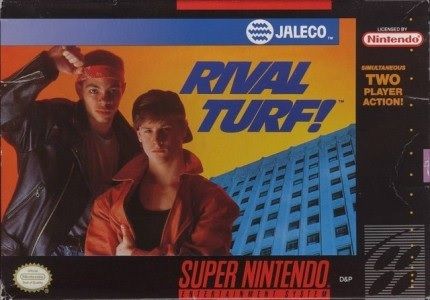
Robowarrior, or Bomber King in Japan, is a spin-off of Hudson Soft’s popular Bomberman series. I consider the use of “King” as being a bit pretentious, but the cyborg can survive a single blast from its own explosives, which is still one more than Bomberman could endure back in the 80s. Sunsoft released a sequel called Blaster Master Jr. that, again, is a title worth more than the game deserves. It was brought to the states by Jaleco, a company best known for the Bases Loaded franchise, but I'll always remember them because of this:

Watch out, we got a couple of bad asses over here!
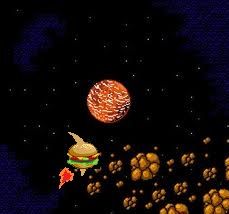
As the story goes, overpopulation of our planet has resulted in the need for scientists to create a new world for future generations to live upon. The antagonist is the Xantho empire, an alien race from another dimension, led by Xur (A The Last Starfighter reference, I'm assuming) that takes control of the man-made planet called Altile and changes the climate to suit their own needs. Meanwhile, the former inhabitants now hide underground in fear. In response, Earth sends a single Gort look-a-like to handle the matter, because all the other cyborgs resembling robots from old films were dismantled once worldwide peace had been obtained. No worries! This is the strongest robot warrior ever created… I think, which is why he was given the most colorful laser gun Toys "R" Us had to offer and sent into space riding a ship whose design appears to be loosely based upon the Millennium Falcon, which was inspired by a hamburger.


Basically, the story here is something any fan of sci-fi could have written during the commercial breaks of a Battlestar Galactica episode.

You control ZED, an acronym for Z-type Earth Defense, but since this is the American-given name, I’m going to make a wild guess and believe that it was inspired by David Zed, which none of you reading this may know is a mime from the 70s whose shtick was to get on stage and act like a cyborg. In 1980, he was also recognized for his song R.O.B.O.T. at the Sanremo Music Festival. 

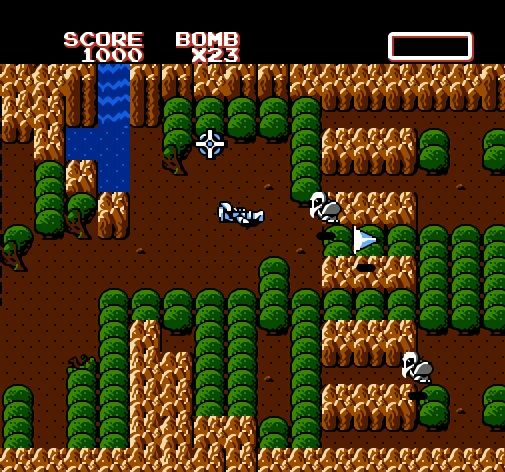
ZED is dropped off in a cleared area surrounded by a forest that seems to be unaffected by the climate change and is welcomed by the survivors with a couple of goodies sprawled out on the ground. You won’t meet any of these people, because no one in their right state of mind would stand around a monster-infested area waiting for a guy whose idea of a greeting includes gunfire, explosions, and, worst of all, a pie plate salad he made during the trip.

No thank you. I already had a big helping of Scrapple right before you arrived.
Once you leave the screen, you have a significantly smaller bit of room and enemies will start flying across the screen to help chip away what little amount of health you are provided.

“…but Jerod (probably pronounced as “Jer-ROD” just to spite me), I’ve played Bomberman before, and it’s only the first level, so why should I read anything you have to type about the matter?”

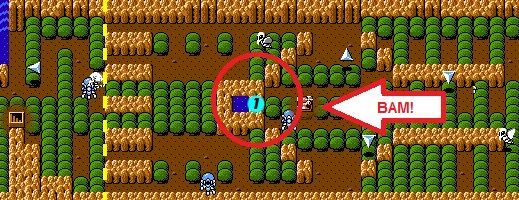
First of all, no one reads this blog, so that question is moot. Second, the game forcibly causes ZED to move backwards a space whenever a bomb is planted, and you’re given minimal time to escape the blast. That smooth, bomb-dropping movement fans are accustomed to from the original series is removed. I don’t recommend ever using more than one bomb at a time unless ZED is properly shielded. Without recharging his batteries, two hits from his own weapon will end the game, and the explosion doesn’t appropriately blow the body to bits, either. Instead, it causes ZED to fall flat on the dirt while an annoying tune plays you off to the title screen. I can only hope you enjoy that piece of music more than I did. You’ll hear it quite a few times.

That's it? No boom?
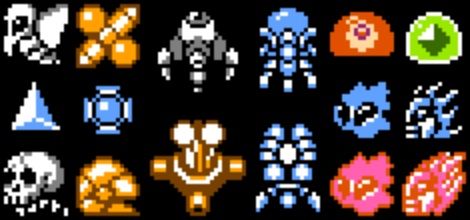
The enemies you face don’t seem to follow any particular theme.


These are all the basic enemies throughout the game.
This may seem odd at first, but imagine if our planet invaded another and we released an assortment of dangerous beings to infest their ecosystem. Sharks, mosquitoes, honey badgers, airborne viruses, anyone from Japan, tree frogs, non-tree frogs, tree frogs that feel like non-tree frogs in tree frog bodies, tapeworms, lions, tigers, bears, Bronies, seals, salamanders, penguins, jellyfish, candles, vultures, elephants, snails, gorillas, protozoa, lawyers, owls, snowmen, platypuses, paper airplanes, Raggedy Ann, cats, bats, rats, the cast of All That, spiders, lemurs, boars, waffles, hawks, bass, Necco Wafers, Ford Pintos, and, if we have the technology to cross dimensions, then we probably have the ability to mass produce ZEDs that might actually be able to fight… or, at least, be turned into walking bombs offering hugs to the locals while being set to explode at the push of a shiny red button with a smiley face on it.


"Don't run! We are your friends!"
Since no one cares that a plant can feel pain, ZED’s strategy is to clear his own path through the trees, leaving a trail of craters in his wake. In retaliation, some of the alien wildlife will fire at your fragile fighter from all directions, regardless of what’s between you and them, while the more dangerous enemies, the tanks and dittos, will wait patiently for you to reach them before launching missiles and turning into flying balls of fire. Your energy might be slowly diminishing as you try to find the exit, but these creatures are your main concern, so remember that.

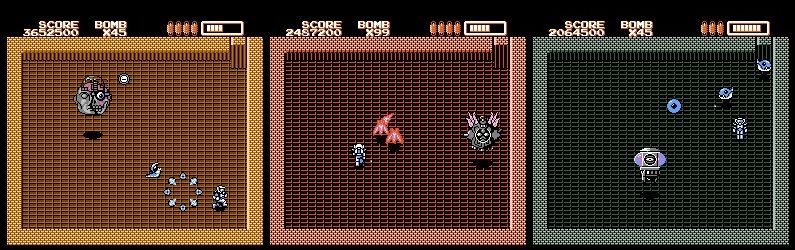
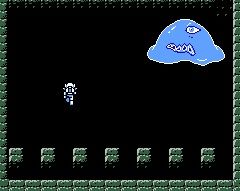
Leading this bunch are seven bosses, three of whom are pretty much the same thing.

Another wonderful example of the "Recurring Boss Template" Trope
They can be defeated using only your basic weapon, and it’s a fine idea for the first one, Globula the giant blue blob of gaming unoriginality, but this tactic takes a while and will burn through your precious “extra” supply when used later against the other six.

A blue slime! Rarely see one of those in a video game.
Bombs are only an effective tool if you can avoid hurting yourself in the process, and everything else in your arsenal is limited to what you've collected. Here is why creatures take priority over reaching the end of each stage. With exception to the few left for him at the landing zone, all your power-ups will be hidden randomly under various breakable objects and scattered about in pitch black tunnels that ZED must also uncover. Since the key is always located in the same spot of each period, it’s tempting to head straight for it and move on to the next level, but I strongly advise against this. A similar situation presents itself in Super Mario Bros. 3. Two of the three warp whistles can be found very early in the game, but using them to quickly reach the final world will leave Mario grossly unprepared for the final stages leading up to Koopa’s castle. In both games, it’s better to collect a bunch of power-ups early in the game before heading into darker territory.

When ZED inevitably falls, continuing will merely result in restarting the period without your points. You get to keep all the junk collected, but, believe it or not, those points do serve a purpose in this game. The higher your score, the less damage you take. Still, after getting defeated a dozen times, I had a nice supply of stuff in my inventory, made better by a secret within the stage that not only cleared the screen of enemies, but also doubled the amount of most of the items I had. In moments like that one, it felt like Hudson realized how this was going to play out for a first-timer and provided that treat as a reward for not giving up and smashing the cartridge into multiple choke hazards. On the other hand, to access the bonus, one had to know to bomb the same bit of wall five times and then stand in the water. Some quickly learn at the start of period 1-1 that ZED doesn’t swim, so while it seems suspicious that a square of water is surrounded by a rock wall in the middle of the area, most are not going to think to use at least five bombs at each part of the wall to find the right one to get inside. There are other spots like this one, as well as bonus rooms, but this game isn't really  that much fun to explore. Thankfully, we now have walkthroughs! Wonderful, glorious walkthroughs!

Thank you, Strategywiki!

Taking this a step further, using a walkthrough makes Robowarrior a significantly better game to play. The real fun and challenge lies in trying to survive. Back in the 80s, this felt more like an Easter egg hunt with only one egg and you had to search an entire neighborhood to find it. Making a game “Nintendo hard” isn’t necessarily a bad thing. It worked well with Contra and Ghosts’n Goblins. The problem with Robowarrior was that its developers based their work around the phrase “finding a needle in a haystack” and thought that was a good idea. Again, just use a walkthrough. It’ll allow you to skip all the stupid searching bullshit that no one enjoyed and focus upon keeping your cyborg from getting killed. Actually, just go play a real Bomberman game, instead. It’s pretty much the same thing at that point.